If your teeth looked straight after braces but now seem crowded, rotated, or uneven again, you are not alone. Teeth can shift as an adult, and for many patients, Invisalign may be an option to help realign the smile.
Adult teeth shifting can happen gradually. You may first notice that your retainer feels tight, one front tooth looks slightly turned, floss feels different between certain teeth, or your bite does not feel as even as it used to. These small changes can become more noticeable over time.
At Park Ave Dental Group, patients in Weehawken, NJ can discuss tooth movement, bite changes, and clear aligner options during a dental consultation. If you are wondering why your teeth are shifting as an adult, this guide explains common causes, warning signs, and when it may be time to ask about Invisalign again.
Teeth Can Shift Over Time
Even after braces or clear aligners, teeth may move if retention, bite pressure, gum health, or tooth loss changes over time.
Invisalign May Help
For some adults, clear aligners may help correct mild to moderate shifting without traditional metal braces.
Why Do Teeth Shift as an Adult?
Teeth are not permanently locked in place. They are supported by bone, gums, ligaments, and surrounding teeth. When those support systems or bite forces change, teeth may gradually move.
Adult tooth movement can happen for several reasons. Sometimes it is related to not wearing a retainer after previous orthodontic treatment. Other times, it may be connected to gum health, tooth grinding, missing teeth, aging, or changes in the bite.
In many cases, shifting is slow enough that patients do not notice it right away. By the time the change becomes visible, the teeth may have already moved enough to affect the smile or bite.
Common Causes of Adult Teeth Shifting
There is usually not one single cause of shifting teeth. Several factors can contribute, and your dentist can help identify what may be happening in your mouth.
Not Wearing Retainers
After braces or clear aligners, retainers help hold teeth in their new positions. If retainers are not worn as recommended, teeth may gradually drift.
Grinding or Clenching
Bruxism can place extra pressure on the teeth. Over time, that pressure may contribute to wear, bite changes, or tooth movement.
Gum Health Changes
Healthy gums and bone help support the teeth. Gum disease or bone loss can reduce support and may allow teeth to shift.
Missing Teeth
When a tooth is missing, nearby teeth may drift into the open space. This can affect alignment, bite balance, and chewing function.
Teeth Shifting After Braces
One of the most common reasons adults notice shifting is that they had braces years ago but stopped wearing their retainer. This is very common. Life gets busy, retainers get lost, or they may no longer fit comfortably.
Unfortunately, once retainers are no longer worn, teeth can slowly move out of alignment. This does not always mean the original orthodontic treatment failed. It often means the teeth needed ongoing retention to maintain the result.
If your teeth shifted after braces, Invisalign may be an option depending on how much movement has occurred. Park Ave Dental Group offers Invisalign treatment for patients interested in clear aligners.
Patient tip: If your old retainer feels tight, cracked, painful, or does not fully seat, do not force it. Schedule a dental evaluation to see whether a new retainer or updated alignment treatment is needed.
Signs Your Teeth May Be Shifting
Tooth movement is not always obvious at first. Some signs are visual, while others show up in the way your teeth feel when you bite, floss, or wear a retainer.
Signs to watch for include:
- One or more teeth look slightly rotated
- Your front teeth appear more crowded
- New gaps are appearing between teeth
- Your retainer feels tight or no longer fits
- Food gets stuck in new areas
- Floss feels tighter or looser between certain teeth
- Your bite feels uneven
- Your teeth feel like they hit differently when chewing
- You notice more wear on certain teeth
- Your smile looks less balanced than it used to
If you notice any of these changes, it is worth bringing them up at your next dental visit. Early evaluation may help prevent the shifting from becoming more difficult to correct.
Can Invisalign Fix Teeth That Shifted?
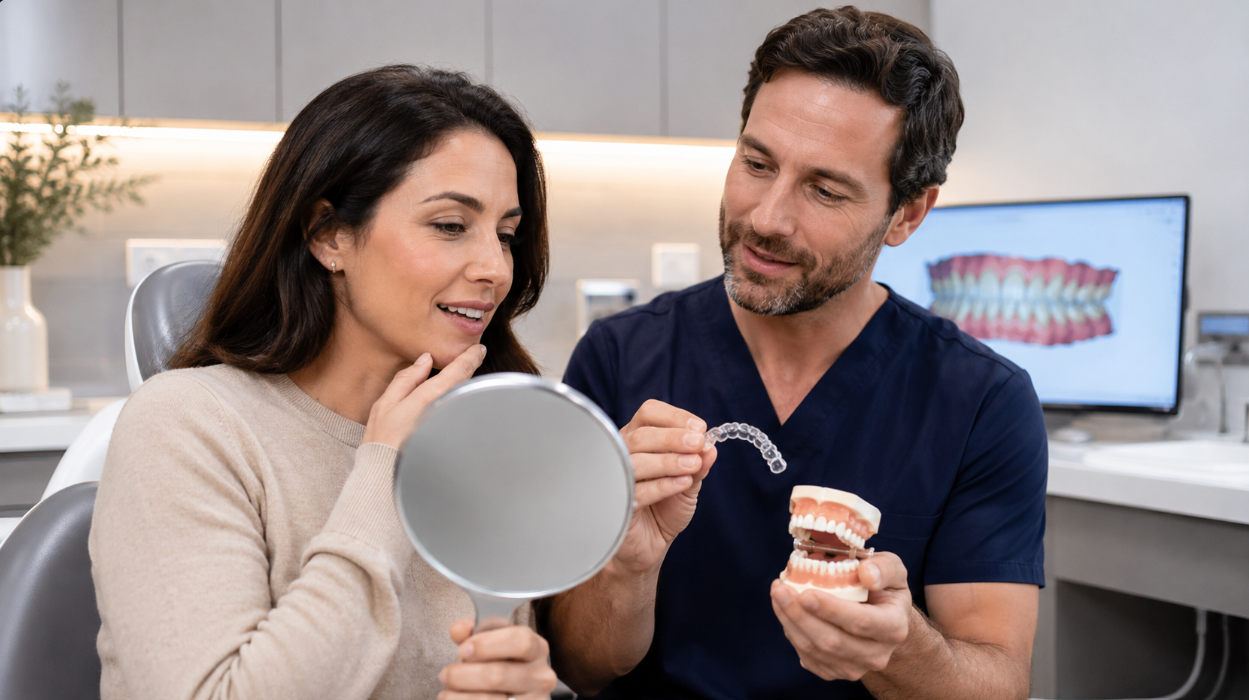
Invisalign may help many adults whose teeth have shifted, especially when the movement is mild to moderate. Clear aligners are custom-made to gradually move teeth into better positions.
Invisalign may be used to address crowding, spacing, rotated teeth, and certain bite concerns. However, it is not right for every case. Severe movement, complex bite issues, gum disease, or other dental problems may require a different approach.
If you are unsure whether Invisalign is right for your case, Park Ave Dental Group has a helpful related article on whether you should choose a dentist or orthodontist for Invisalign.
Noticing Your Teeth Shift?
A consultation can help determine whether Invisalign, a new retainer, or another dental treatment makes sense for your smile and bite.
Request an AppointmentInvisalign Again: Is It Common for Adults?
Yes, many adults consider Invisalign after having braces earlier in life. This is sometimes called orthodontic retreatment. Patients often seek treatment because their teeth shifted after they stopped wearing retainers, or because they want to correct smaller alignment changes before they become more noticeable.
For some patients, Invisalign retreatment may be less involved than their original braces treatment. However, that depends on how much the teeth have moved and whether the bite has changed.
A dentist can evaluate your teeth, take digital scans or X-rays when needed, and explain whether clear aligners may be appropriate.
What Happens During an Invisalign Consultation?
During an Invisalign consultation, your dentist will examine your teeth, gums, bite, and smile goals. The goal is to determine whether clear aligners can move your teeth safely and predictably.
Your visit may include:
Smile and Bite Evaluation
Your dentist will check how your teeth align, how your bite comes together, and whether the shifting is mild, moderate, or more complex.
Digital Scans or Imaging
Digital scans or X-rays may be used to evaluate tooth position, bone support, and treatment planning needs.
Discussion of Treatment Options
Your dentist may discuss Invisalign, retainers, cosmetic options, or other dental treatments depending on what is causing the movement.
Timeline and Maintenance Plan
If Invisalign is recommended, your dentist can explain the expected treatment process and how retention works after treatment.
When Shifting Teeth May Need More Than Invisalign
Invisalign can be helpful for many cases, but it may not solve every cause of tooth movement. If shifting is related to gum disease, missing teeth, worn teeth, or bite problems, those concerns may need to be addressed first.
For example, if a missing tooth caused nearby teeth to drift, replacing the missing tooth may be part of the long-term plan. If gum disease is reducing tooth support, periodontal treatment may be needed before orthodontic movement is considered.
If the shifting is part of a larger cosmetic concern, your dentist may also discuss cosmetic dentistry options after alignment is improved.
Why Retainers Matter After Invisalign
Retainers are an important part of keeping teeth in place after Invisalign. Once teeth are moved, they need support to stay in their new positions. Without retainers, teeth can gradually shift again.
If you already experienced shifting after braces, retention will be especially important after Invisalign treatment. Your dentist can explain how often to wear your retainer and when it may need to be replaced.
Retainers can wear out, crack, loosen, or stop fitting properly over time. If your retainer feels different, schedule a dental visit instead of waiting until your teeth noticeably shift.
Simple Rule of Thumb
If your teeth shifted once, they can shift again. A consistent retainer plan is one of the most important parts of maintaining your Invisalign result.
Can Teeth Shifting Affect More Than Appearance?
Yes. While many patients first notice shifting because of how their smile looks, tooth movement can also affect bite function and oral hygiene.
Crowded teeth can make it harder to clean between teeth. Bite changes may place extra pressure on certain teeth. Gaps can trap food. Rotated teeth may create areas where plaque collects more easily.
This is why shifting should not be viewed only as a cosmetic issue. Straightening teeth may improve smile appearance, but it can also support easier cleaning and more balanced function.
How to Help Prevent Teeth From Shifting
Not all tooth movement can be prevented, but good habits can help reduce your risk. The most important step after orthodontic treatment is wearing your retainer as directed.
Helpful habits include:
- Wear retainers as recommended
- Replace worn or damaged retainers
- Keep up with dental cleanings and exams
- Treat gum disease early
- Ask about a nightguard if you grind or clench
- Replace missing teeth when appropriate
- Avoid using teeth as tools
- Call your dentist if your bite feels different
Regular dental visits can help your dentist identify small changes before they become larger issues. If you are new to the practice, Park Ave Dental Group’s article on what to expect during your first dental visit can help you prepare.
Final Thoughts: Adult Teeth Shifting Is Common, But It Should Be Checked
Teeth shifting as an adult can happen for several reasons, including retainer changes, grinding, gum health issues, missing teeth, aging, or natural bite forces. The good news is that many patients have options for improving alignment again.
If you notice crowding, gaps, rotated teeth, a tight retainer, or bite changes, schedule a consultation with Park Ave Dental Group in Weehawken, NJ. The team can evaluate your smile, explain what may be causing the movement, and help you understand whether Invisalign or another treatment may be right for you.
FAQ: Teeth Shifting as an Adult
Why are my teeth shifting as an adult?
Adult teeth can shift because of retainer changes, grinding, gum disease, missing teeth, bite pressure, aging, or previous orthodontic movement. A dental exam can help identify the cause.
Can teeth shift years after braces?
Yes. Teeth can shift years after braces, especially if retainers are not worn as recommended or if the bite, gums, or surrounding teeth change over time.
Can Invisalign fix teeth that shifted after braces?
Invisalign may help correct mild to moderate shifting after braces. The best way to know is through a consultation to evaluate your teeth, bite, and gum health.
What are signs my teeth are moving?
Signs may include a tight retainer, new crowding, new gaps, rotated teeth, food getting stuck in new places, changes in flossing, or a bite that feels uneven.
Should I force my old retainer to fit?
No. If your retainer no longer fits, do not force it. Schedule a dental evaluation to see whether you need a new retainer or updated alignment treatment.
Can grinding make teeth shift?
Grinding or clenching can place extra pressure on teeth and may contribute to wear, bite changes, or movement. Your dentist may recommend a nightguard if grinding is a concern.
Can gum disease make teeth move?
Yes. Gum disease can affect the bone and tissue that support teeth. If support is reduced, teeth may loosen or shift. Gum health should be evaluated before orthodontic treatment.
How do I stop my teeth from shifting?
Wearing retainers as directed, maintaining gum health, treating missing teeth, managing grinding, and keeping regular dental visits can help reduce the risk of shifting.
Is it normal for teeth to shift with age?
Some tooth movement can happen with age, but noticeable crowding, gaps, or bite changes should be evaluated by a dentist.
When should I ask about Invisalign again?
You should ask about Invisalign if your teeth have shifted, your retainer no longer fits, your smile looks crowded, or your bite feels different. A consultation can help determine whether clear aligners are appropriate.