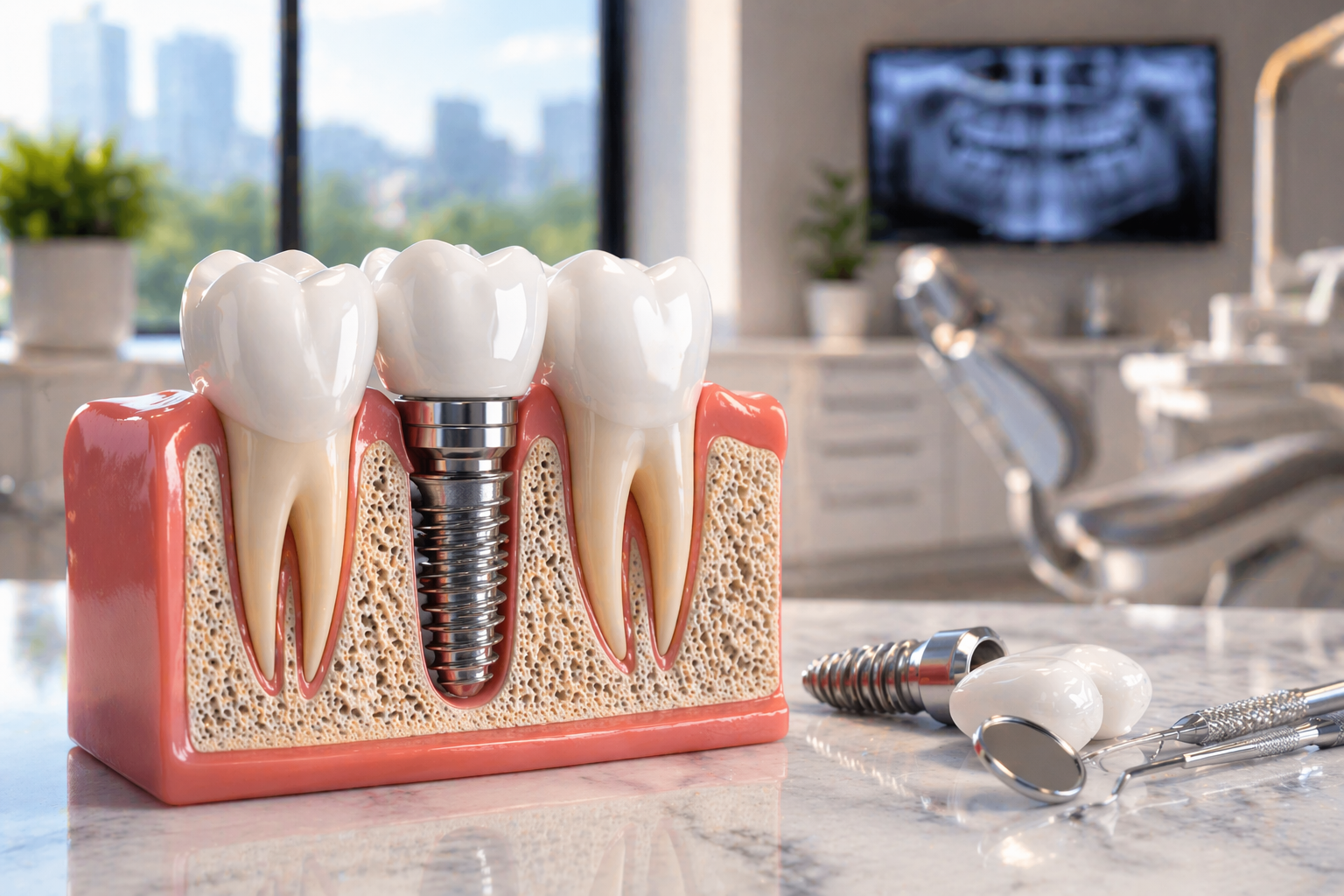
Missing teeth impact more than your smile. They make chewing less efficient, affect speech, allow remaining teeth to drift out of position and can lead to bone loss in the jaw. Dental implants provide a long‑term solution that looks, feels and functions like natural teeth. This comprehensive guide explains how implants work, the different types available, the step‑by‑step process and what to expect throughout treatment.
What Are Dental Implants?
A dental implant is an artificial root made of biocompatible titanium that is surgically placed in your jawbone. An abutment connects this implant to an artificial tooth (crown). Because the implant fuses with the bone, it provides solid support, preventing slippage and preserving bone integrity. Dental implants are a great option when bridges or dentures are not ideal or if you want a stable, natural‑looking replacement for one or more missing teeth.
Dental implants may be right for you if you have one or more missing teeth, a fully developed jawbone, adequate bone volume (or are willing to undergo bone grafting), healthy oral tissues and no conditions that impair healing. Patients should also be committed to the process, which can take several months.
Types of Dental Implants
Not all implants are the same. Dentists choose among several types based on your anatomy and the number of teeth being replaced.
- Endosteal Implants: These are the most common implants. They are placed directly into the jawbone and serve as anchors for single crowns or implant‑supported bridges.
- Subperiosteal Implants: Instead of being inserted into bone, subperiosteal implants sit on top of the jawbone under the gum tissue. They are used for patients who lack enough bone height and cannot undergo bone grafting.
- Zygomatic Implants: These longer implants are anchored in the cheekbone (zygoma) and are used when the upper jaw has inadequate bone.
- All‑on‑4® Implants: This technique uses four implants in each arch to support a full set of replacement teeth. It offers increased stability while minimizing the number of implants needed.
The Dental Implant Process
1. Consultation and Planning: Your journey begins with a comprehensive evaluation at Park Ave Dental Group. We assess your oral health, take digital X‑rays or a 3D iTero® scan and discuss your goals. If you need bone grafting or tooth extractions, we incorporate these procedures into your treatment plan.
2. Implant Placement: Under local anesthesia and sedation if needed, the dentist or oral surgeon places the titanium implant into the jawbone. For an endosteal implant, a small incision exposes the bone, and the implant is inserted. Subperiosteal or zygomatic implants require a slightly different approach but serve the same purpose of securing the artificial tooth.
3. Healing and Osseointegration: After placement, your body begins a healing process called osseointegration, during which the bone fuses to the implant. This phase typically takes 3–6 months. During this time you may wear a temporary tooth or denture.
4. Abutment Attachment: Once the implant has integrated, a small connector (abutment) is attached. The gum tissue heals around the abutment over the next few weeks.
5. Impression and Crown Fabrication: After the gums heal, impressions are taken of your mouth. A dental laboratory custom‑makes an artificial tooth or bridge that matches the shape and colour of your natural teeth.
6. Crown Placement: The final prosthetic tooth is secured onto the abutment. Your dentist will check the fit, bite and appearance to ensure your new tooth feels comfortable and looks natural.
7. Follow‑Up Care: We schedule regular visits to monitor healing, remove stitches and adjust as necessary.
Benefits of Dental Implants
- Natural Look and Feel: Implants look and function like your own teeth. The crown is custom‑shaded and shaped to match your smile.
- Bone Preservation: Implants stimulate the jawbone, preventing bone loss that occurs when teeth are missing.
- Improved Oral Function: Unlike removable dentures, implants won’t slip when you chew or speak, which enhances confidence and comfort.
- Durability: Made of titanium and porcelain, implants are strong and designed to last a lifetime with proper care.
- Protects Adjacent Teeth: Unlike traditional bridges, implants don’t require grinding down neighbouring teeth. They fill the gap and prevent surrounding teeth from shifting.
- Enhanced Facial Appearance: Restoring missing teeth helps support facial structures and prevent sagging.
Aftercare and Maintenance
Caring for dental implants is similar to caring for natural teeth. Brush twice daily, floss around the implant with floss or interdental brushes and use an antimicrobial mouthwash. Although implants are not susceptible to cavities, the surrounding gum tissue can still develop inflammation. Regular dental visits allow us to monitor the implant and perform professional cleanings. Avoid smoking or chewing tobacco, as these habits can impair healing and increase the risk of implant failure. If you grind your teeth, a night guard protects your new restoration.
Are Implants Right for You?
Implants require a healthy jawbone, good overall health and a commitment to oral hygiene. If you have conditions such as uncontrolled diabetes, certain autoimmune disorders or take medications that affect bone healing, implants may not be suitable. During your consultation, we will review your medical history and discuss alternative solutions if implants aren’t the best option.
Dental Implants at Park Ave Dental Group
Our Weehawken practice uses advanced imaging and implant‑planning software to ensure accurate placement and optimal results. We offer a range of implant options and sedation techniques to ensure comfort. Because we also provide restorative dentistry and cosmetic dentistry, we can coordinate your entire smile makeover. Ready to explore tooth replacement options? Contact us to schedule your implant consultation.
Frequently Asked Questions About Dental Implants
Are dental implants painful?
During surgery, local anesthesia and sedation keep you comfortable. You may feel pressure but not pain. After the procedure, mild soreness is typical and can be managed with over‑the‑counter pain relievers. Most patients return to normal activities within a day or two.
How long does the implant process take?
From initial consultation to final crown placement, the implant process usually takes several months. This timeframe allows for healing and osseointegration. In some cases, immediate‑load implants can support a temporary crown sooner, but long‑term success still relies on proper healing.
How long do dental implants last?
With proper care, implants can last decades or even a lifetime. Regular checkups, good oral hygiene and a healthy lifestyle are key.
What if I don’t have enough bone?
Bone grafting can build up insufficient bone to support implants. Our team will determine if you need grafting and explain the process.
Is there an age limit for dental implants?
There is no upper age limit. As long as you are healthy and your jawbone has finished developing, you may be a candidate. Some older adults find implants restore their quality of life better than dentures.