A smile that is evenly spaced and properly aligned does more than make a great first impression – it contributes to the health of your mouth. When teeth are crowded, crooked or poorly aligned, they can be harder to clean properly, increasing the risk of cavities and gum disease. They also affect how you chew and speak and may place extra stress on the jaw joints. Braces remain one of the most effective ways to correct these issues. Modern orthodontics offers several types of braces to fit a variety of lifestyles and needs. This guide explains how braces work, the main types available, what to expect during treatment and how to care for your smile during your orthodontic journey.
How Braces Work
Braces straighten teeth by applying gentle, constant pressure that slowly moves your teeth and the bones that support them into better positions. Traditional braces consist of small brackets that are bonded to the front surfaces of the teeth. An archwire runs through slots in these brackets and is held in place with tiny elastic bands or clips. Your orthodontist periodically adjusts the wire to guide teeth into their new positions. Over time, bone remodels around the teeth to support their new alignment. Most people wear braces for about 18 – 24 months, though treatment may be shorter or longer depending on the severity of the misalignment and the patient’s age. Orthodontic treatment works for children, teens and adults alike; in fact, around one in five orthodontic patients is an adult.
Why Alignment Matters
Teeth that are out of alignment can cause more than cosmetic concerns. Misaligned bites may lead to excessive tooth wear, jaw pain and difficulty chewing or speaking. Crowded teeth create hard‑to‑clean areas where plaque and tartar build up. Straightening teeth helps reduce the risk of decay and gum disease and can alleviate strain on the jaw joints. An aligned smile is also easier to clean, making it more likely that you’ll maintain healthy teeth and gums for life.
Types of Braces
Orthodontic technology has evolved dramatically in recent years, giving patients several options to choose from. The right system depends on your orthodontic needs, aesthetic preferences and budget.
Traditional Metal Braces
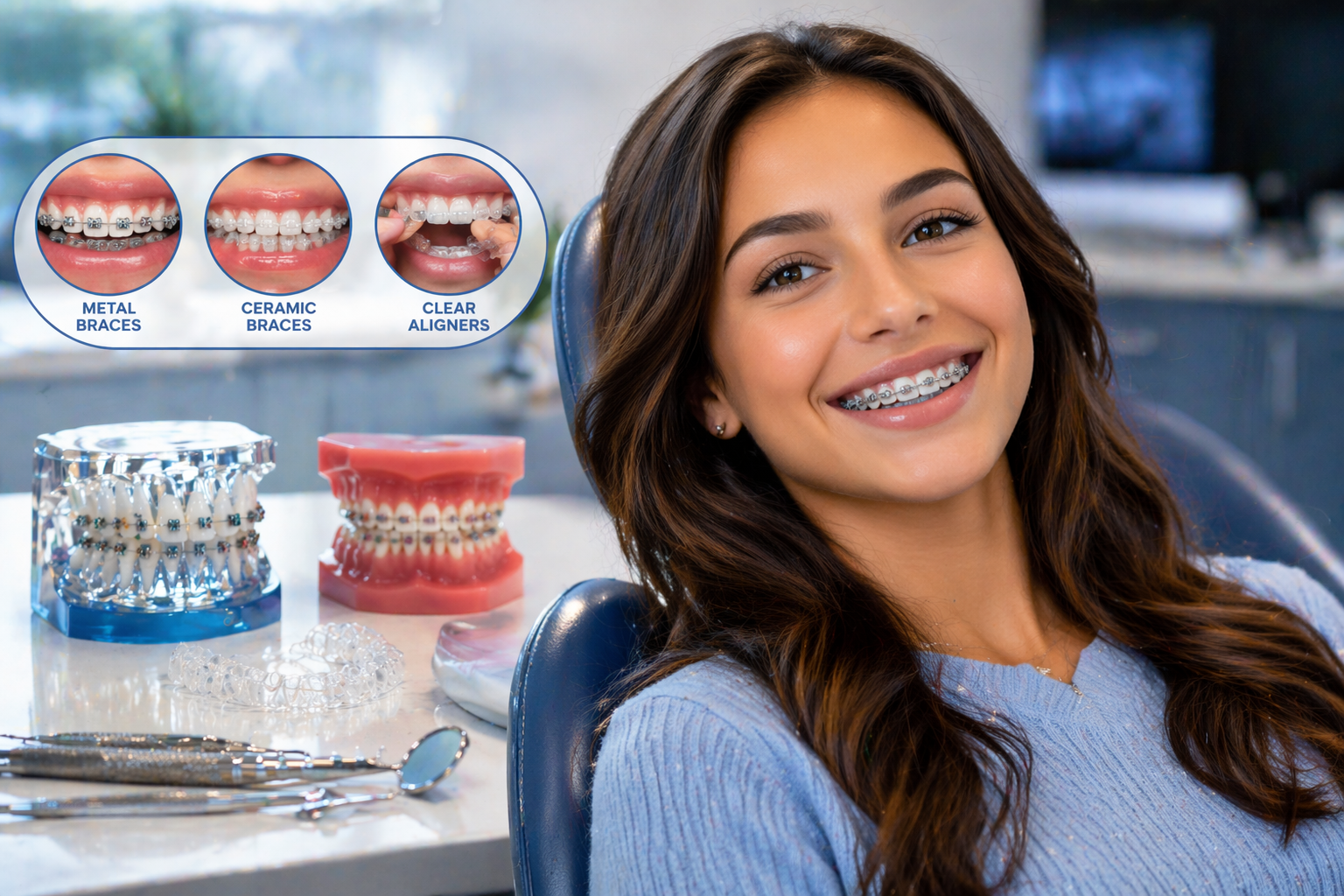
When most people envision braces they think of metal brackets and wires. Metal braces use stainless steel brackets that are bonded to each tooth. A thin, flexible archwire connects the brackets and is adjusted periodically to shift the teeth. Metal braces are durable and suitable for treating even complex alignment issues. Coloured elastic bands allow younger patients to personalize their braces. Because they are visible, some patients prefer other options.
Ceramic Braces
Ceramic braces work the same way as metal braces, but the brackets and wires are tooth‑coloured to blend with the natural teeth. They are less noticeable than metal braces, but the ceramic brackets are more fragile and may break or stain more easily. Ceramic braces are best suited for patients who want a more discreet option but still need the control provided by traditional orthodontics.
Lingual Braces
Lingual braces are similar to metal braces, but the brackets are bonded to the back (tongue‑side) surfaces of the teeth instead of the front. From the outside they are virtually invisible, which appeals to adults and teens who want a discreet treatment. However, lingual braces can be more challenging to clean and adjust, may affect speech initially and often cost more.
Self‑Ligating Braces
Self‑ligating braces look like traditional braces but use a clip mechanism instead of elastic bands to hold the archwire in place. The reduced friction may result in fewer adjustment appointments and can make it easier to keep the braces clean. Self‑ligating systems are available in metal or ceramic options.
Clear Aligners (Braces Alternative)
While not a type of braces, clear aligners like Invisalign® deserve mention as an orthodontic solution. They consist of a series of removable plastic trays that gradually move teeth. Aligners are nearly invisible and can be removed for eating and cleaning, but they are best for mild to moderate alignment issues and require strict patient compliance. For complex cases, fixed braces often remain the gold standard.
What to Expect During Treatment
- Initial Consultation: During your consultation at Park Ave Dental Group, your dentist or orthodontist will examine your bite, take X‑rays or 3D scans and discuss your goals. They will recommend the most appropriate type of braces.
- Bonding Day: When treatment begins, the dental team carefully cleans and dries your teeth before bonding the brackets. An archwire is threaded through the brackets and secured with elastic bands or clips. You’ll receive instructions on how to care for your braces.
- Adjustment Visits: Periodic appointments allow the orthodontist to adjust the wires or change aligners. These visits are usually scheduled every 4–8 weeks. Some discomfort or pressure is normal for a day or two after adjustments, but over‑the‑counter pain relief and orthodontic wax usually make it manageable.
- Oral Hygiene Care: Brushing after every meal, flossing daily with floss threaders or a water flosser and using mouthwash help prevent plaque buildup around brackets. Regular professional cleanings are essential; our preventive team can coordinate cleanings while you’re in braces.
- Dietary Modifications: Hard or sticky foods can break brackets or bend wires, so avoid chewing ice, biting into whole apples, popcorn kernels, hard candies, gum and chewy caramels. Cutting food into small pieces and chewing carefully protects your braces.
- Retention Phase: After the braces come off, you’ll wear a retainer to keep your teeth in their new positions. Retainer use is critical because teeth naturally try to shift back.
Benefits of Braces
Orthodontic treatment is an investment in your health. Properly aligned teeth:
- Improve oral health. Straight teeth are easier to brush and floss, reducing plaque buildup and lowering the risk of cavities and gum disease.
- Enhance bite function. Correcting overbites, underbites and crossbites balances the forces on teeth and jaw joints, reducing strain and preventing abnormal wear.
- Boost confidence. A straighter smile often translates into greater self‑esteem and willingness to smile openly.
- Improve speech and chewing. Proper alignment enhances your ability to bite and speak clearly.
- Prevent future problems. Early orthodontic treatment can reduce the need for more extensive dental work later in life.
Braces vs. Clear Aligners: Which to Choose?
Aligners like Invisalign® offer a more discreet, removable option. However, braces often provide better results for complex tooth movements or bite corrections. Braces are fixed in place, meaning compliance is guaranteed. Aligners require wearing the trays for 20–22 hours each day. If you’re curious about clear aligners, explore our Invisalign treatment page or discuss your options during a consultation.
Choosing the Right Dental Team
Orthodontic treatment should be supervised by a dental professional with specialized training. At Park Ave Dental Group in Weehawken, our team can manage both orthodontic and general dental needs in one convenient location. We use advanced imaging technology and offer a range of braces, including Invisalign, to create a personalized treatment plan. Our practice also provides preventive, restorative and cosmetic services, so you can continue your care with the same team from start to finish. Ready to begin your smile transformation? Contact us today.
Frequently Asked Questions About Braces
How long does orthodontic treatment take?
Most patients wear braces for 18 – 24 months, but treatment can range from under a year to several years depending on the complexity of the case and how well you follow your orthodontist’s instructions.
Are braces painful?
You may experience mild discomfort or soreness for a few days after getting braces or after adjustments. Over‑the‑counter pain relievers and orthodontic wax can help manage this discomfort. Within a week, most patients adapt to the sensation.
Can adults get braces?
Absolutely. Braces work for adults just as well as they do for children and teens. Because adult bones are denser, treatment may take a little longer, but the results are just as rewarding.
How often will I need to visit the dentist?
You’ll see your orthodontist every 4–8 weeks for adjustments. It’s also important to keep up with regular cleanings and exams to monitor your overall oral health.
How should I care for my teeth while wearing braces?
Brush after every meal with a soft‑bristled brush, floss daily using special threaders or a water flosser, and avoid hard or sticky foods that can damage your braces. Use fluoride toothpaste and rinse with an antimicrobial mouthwash. Regular dental cleanings will help keep your teeth and gums healthy.
What happens after the braces come off?
You’ll be fitted for a retainer, which you’ll need to wear as directed to keep your teeth in their new positions. Some retainers are removable while others are bonded behind the teeth. Wearing your retainer is crucial to maintain your straight smile.