If you are thinking about straightening your teeth with Invisalign, one of the first questions you probably have is simple: how much does Invisalign cost?
The honest answer is that Invisalign pricing is not one-size-fits-all. The cost can vary depending on your smile, bite alignment, treatment length, case complexity, insurance coverage, and the type of dental technology used to plan your care. For patients in Weehawken, NJ, the best way to understand the true cost of Invisalign is to schedule a consultation with a dentist who can evaluate your teeth, discuss your goals, and explain your options clearly.
At Park Ave Dental Group, Invisalign treatment is designed to be discreet, comfortable, and personalized. Whether you have crowded teeth, small gaps, shifting after braces, or bite concerns, clear aligners may be a convenient way to improve your smile without traditional metal brackets and wires.
Why Invisalign Cost Can Vary From Patient to Patient
Invisalign treatment is customized for each patient. That means the final cost depends on what your teeth need, how much movement is required, and how long your treatment may take. A patient with minor spacing may have a different treatment plan than someone with crowding, bite concerns, or teeth that have shifted significantly over time.
Some of the biggest factors that can affect Invisalign cost include:
- The severity of crowding or spacing
- Whether bite correction is needed
- The estimated number of aligners
- The length of treatment
- Whether additional dental work is needed first
- Digital scans, treatment planning, and follow-up visits
- Retainers after treatment
- Dental insurance or financing options
This is why two people can both be good Invisalign candidates but still have different pricing. Invisalign is not just a product you buy. It is a full orthodontic treatment process that includes diagnosis, planning, monitoring, and retention after the teeth move into better alignment.
What Invisalign Can Help Fix
Invisalign clear aligners can be used for a variety of orthodontic concerns. Many patients choose Invisalign because they want a straighter smile without the look and feel of metal braces. However, Invisalign is not only cosmetic. Proper tooth alignment can also make it easier to clean between teeth, improve bite balance, and reduce areas where plaque can build up.
Invisalign may help with:
- Crowded teeth
- Gaps between teeth
- Mild to moderate overbite
- Mild to moderate underbite
- Crossbite
- Open bite
- Teeth that shifted after previous orthodontic treatment
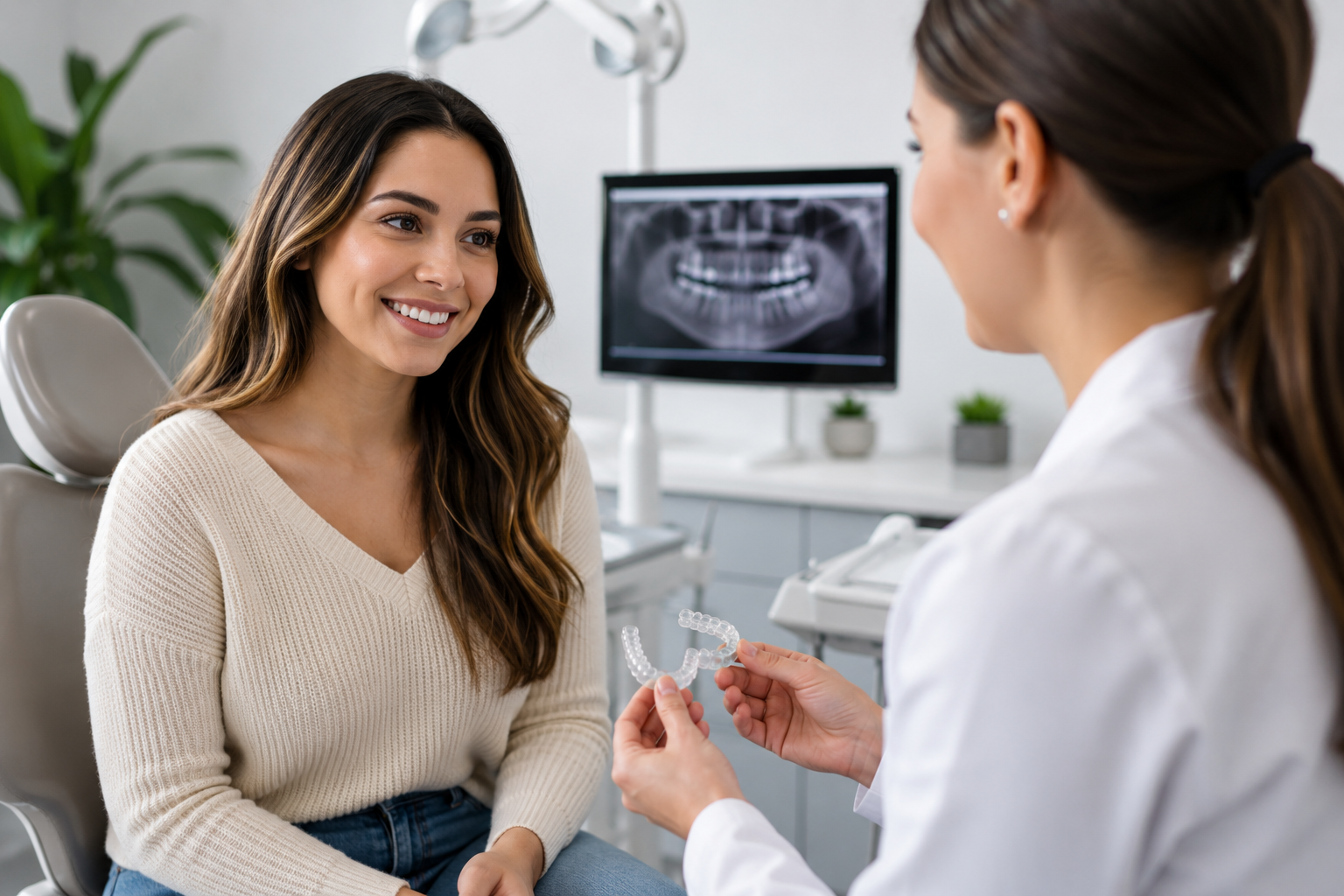
If you are unsure whether Invisalign is right for your case, this is where a consultation matters. A dentist can examine your bite, take digital images or scans, and determine whether clear aligners are appropriate or whether another option may be better.
You can also learn more about treatment selection in this related article on whether you should choose a dentist or orthodontist for Invisalign.
Factor 1: The Complexity of Your Case
The biggest factor in Invisalign cost is usually the complexity of the case. Minor tooth movement may require fewer aligners and less time, while more involved alignment problems may require a longer treatment plan.
For example, a patient who only wants to close a small gap between the front teeth may need a simpler plan than a patient with crowding, rotated teeth, and bite correction. The more movement required, the more detailed the treatment plan needs to be.
This does not automatically mean Invisalign will be out of reach if your case is more involved. It simply means your dentist needs to evaluate your smile carefully before giving you a realistic cost estimate.
Factor 2: Treatment Length
Another major factor that affects Invisalign pricing is treatment length. Invisalign works by using a series of custom-made clear aligners that gradually move your teeth. Each set of aligners is worn according to your dentist’s instructions before moving to the next set.
Shorter treatment plans may involve fewer aligners, while longer plans usually require more aligners and additional monitoring. Treatment time can vary depending on how much your teeth need to move and how consistently you wear your aligners.
Patient compliance is very important. Invisalign aligners are removable, which is convenient, but they only work when worn as directed. If aligners are not worn consistently, treatment may take longer than expected.
Factor 3: Invisalign vs. Braces
Many patients compare Invisalign cost with the cost of traditional braces. Both options can be effective, but they work differently and offer different lifestyle benefits.
Traditional braces use brackets and wires to move teeth. Invisalign uses removable clear aligners. Some patients prefer Invisalign because the trays are more discreet, can be removed for eating, and make brushing and flossing easier compared with braces.
However, the right choice depends on your dental needs. Some cases may be better suited for braces, especially if significant bite correction is required. Other patients may be strong candidates for clear aligners.
For a deeper comparison, read this guide on braces vs. Invisalign.
Factor 4: Digital Scanning and Treatment Planning
Technology can also play a role in the Invisalign experience. Digital scanning helps create accurate images of your teeth without the need for messy traditional impressions. These scans can help your dentist plan tooth movement and explain what your treatment may involve.
At Park Ave Dental Group, Invisalign treatment planning may include digital scanning to create a more comfortable and personalized experience for patients. This type of technology can make the consultation and planning process easier while helping the dental team create a more customized approach.
Accurate planning matters because Invisalign is not just about making teeth look straighter. The goal is to improve alignment in a way that supports your bite, oral health, and long-term smile stability.
Factor 5: Retainers After Invisalign
Many patients focus on the cost of active Invisalign treatment, but retainers are also an important part of the process. After your teeth move into their new positions, retainers help maintain the results.
Without retainers, teeth can gradually shift back over time. This is especially common for adults who had braces earlier in life and stopped wearing retainers. If your teeth have shifted after previous orthodontic treatment, Invisalign may help realign them, but retention is still necessary afterward.
When asking about Invisalign cost, it is a good idea to ask whether retainers are included in your estimate or listed separately.
Factor 6: Insurance and Financing
Dental insurance may help with part of the cost of Invisalign, depending on your plan. Some plans include orthodontic benefits, while others may have age limits, waiting periods, or coverage restrictions.
Because insurance plans can vary so much, patients should not assume coverage until benefits are verified. During your consultation, the dental team can help explain what information may be needed to better understand your options.
Financing may also be available for patients who want to break treatment into more manageable payments. If cost is a concern, ask about payment options before deciding whether to move forward.
Is Invisalign Worth the Investment?
For many patients, Invisalign is worth considering because it can improve both smile appearance and day-to-day convenience. Straighter teeth can be easier to clean, and many people feel more confident smiling when their teeth are better aligned.
Invisalign may be especially appealing if you want orthodontic treatment that fits into a busy lifestyle. Since the aligners are removable, you can take them out when eating, brushing, and flossing. They are also clear, making them much less noticeable than traditional braces.
That said, Invisalign is still a commitment. You need to wear the aligners consistently, attend follow-up appointments, and follow your dentist’s instructions. The best results come from a combination of good planning and good patient compliance.
How to Know If You Are a Good Candidate for Invisalign
You may be a good candidate for Invisalign if you have mild to moderate alignment concerns and are willing to wear your aligners as directed. Invisalign can be a strong option for adults and teens who want a more discreet alternative to braces.
You may want to consider Invisalign if:
- You have crowded or crooked teeth
- You have small gaps between your teeth
- Your teeth shifted after braces
- You want a less noticeable orthodontic option
- You can commit to wearing aligners consistently
- You want removable trays instead of fixed brackets
However, Invisalign is not the right fit for every patient. Severe bite issues, complex tooth movement, or certain dental health problems may require a different treatment approach. A dental evaluation is the best way to know what is appropriate for your smile.
Why Choose Park Ave Dental Group for Invisalign in Weehawken?
Choosing the right provider matters. Invisalign treatment requires more than ordering clear trays. Your dentist needs to understand your bite, your oral health, your cosmetic goals, and how your teeth should move safely over time.
Park Ave Dental Group provides Invisalign in Weehawken with a patient-centered approach. The team focuses on clear communication, digital planning, and personalized treatment recommendations.
Patients can also explore related cosmetic dentistry options if they are interested in a more complete smile improvement plan.
For some patients, Invisalign may be part of a larger smile makeover. For others, it may be a standalone treatment to correct crowding, gaps, or shifting. Either way, the process starts with understanding your goals and creating a plan that fits your needs.
What to Ask During Your Invisalign Consultation
Before starting Invisalign, it helps to ask the right questions. This can make the cost, timeline, and treatment process easier to understand.
Helpful questions include:
- Am I a good candidate for Invisalign?
- How long do you expect my treatment to take?
- How many hours per day should I wear my aligners?
- Will I need attachments or other supporting treatment?
- Are retainers included after treatment?
- Does my insurance offer orthodontic benefits?
- Are financing options available?
- What happens if I lose or damage an aligner?
A good consultation should leave you with a clear understanding of your options, not pressure or confusion.
Final Thoughts: Invisalign Cost Depends on Your Smile
Invisalign cost in Weehawken, NJ depends on your individual treatment needs. Case complexity, treatment length, digital planning, retainers, insurance, and financing can all affect the final price.
The most important thing to remember is that Invisalign is a customized treatment. A consultation gives you the information you need to make a confident decision about your smile, your budget, and your long-term oral health.
If you are ready to learn whether clear aligners are right for you, schedule an Invisalign consultation with Park Ave Dental Group in Weehawken, NJ. The team can evaluate your smile, answer your questions, and help you understand the next step toward straighter teeth.
FAQ: Invisalign Cost in Weehawken, NJ
How much does Invisalign cost in Weehawken, NJ?
Invisalign cost can vary based on your case complexity, treatment length, aligner needs, dental insurance, and whether retainers are included. The best way to get an accurate estimate is to schedule an Invisalign consultation.
Is Invisalign more expensive than braces?
Invisalign and braces can be similar in cost, but pricing depends on the patient’s needs. Some cases may be better suited for braces, while others may be good candidates for Invisalign clear aligners.
Does dental insurance cover Invisalign?
Some dental insurance plans include orthodontic benefits that may apply to Invisalign. Coverage depends on your specific plan, age limits, waiting periods, and benefit details.
What affects the price of Invisalign the most?
The biggest factors are case complexity, treatment length, number of aligners, digital planning, follow-up visits, retainers, and insurance coverage.
Can Invisalign fix crowded teeth?
Invisalign may help correct mild to moderate crowding. More complex cases may require a different orthodontic approach, so an in-person evaluation is recommended.
Can adults get Invisalign?
Yes, many adults choose Invisalign because the aligners are clear, removable, and discreet. Adults who had braces years ago and experienced shifting may also be candidates.
How long does Invisalign treatment take?
Treatment time depends on how much your teeth need to move and how consistently you wear your aligners. Your dentist can provide a more accurate timeline after evaluating your smile.
Are retainers needed after Invisalign?
Yes, retainers are usually needed after Invisalign to help keep teeth in their new positions. Without retainers, teeth may gradually shift over time.
Is Invisalign painful?
Invisalign may cause temporary pressure or soreness when teeth begin moving or when switching to a new aligner. Any discomfort is usually related to tooth movement, but your dentist can explain what to expect based on your case.
How do I know if Invisalign is right for me?
The best way to know is through a dental consultation. A dentist can examine your teeth, bite, and oral health to determine whether Invisalign is a good fit for your goals.