Invisalign is one of the most popular ways to straighten teeth without traditional metal braces. Many patients are interested in clear aligners because they are discreet, removable, and easier to fit into everyday life.
But before starting treatment, most patients have an important question: what can Invisalign actually fix?
Invisalign can help correct many mild to moderate alignment issues, including crowded teeth, gaps, rotated teeth, and certain bite concerns. It can also be helpful for adults whose teeth shifted after braces. However, Invisalign is not right for every orthodontic problem. Some complex cases may still require traditional braces or another form of treatment.
At Park Ave Dental Aesthetics, patients can explore Invisalign in Weehawken and find out whether clear aligners are the right choice for their smile.
How Invisalign Works
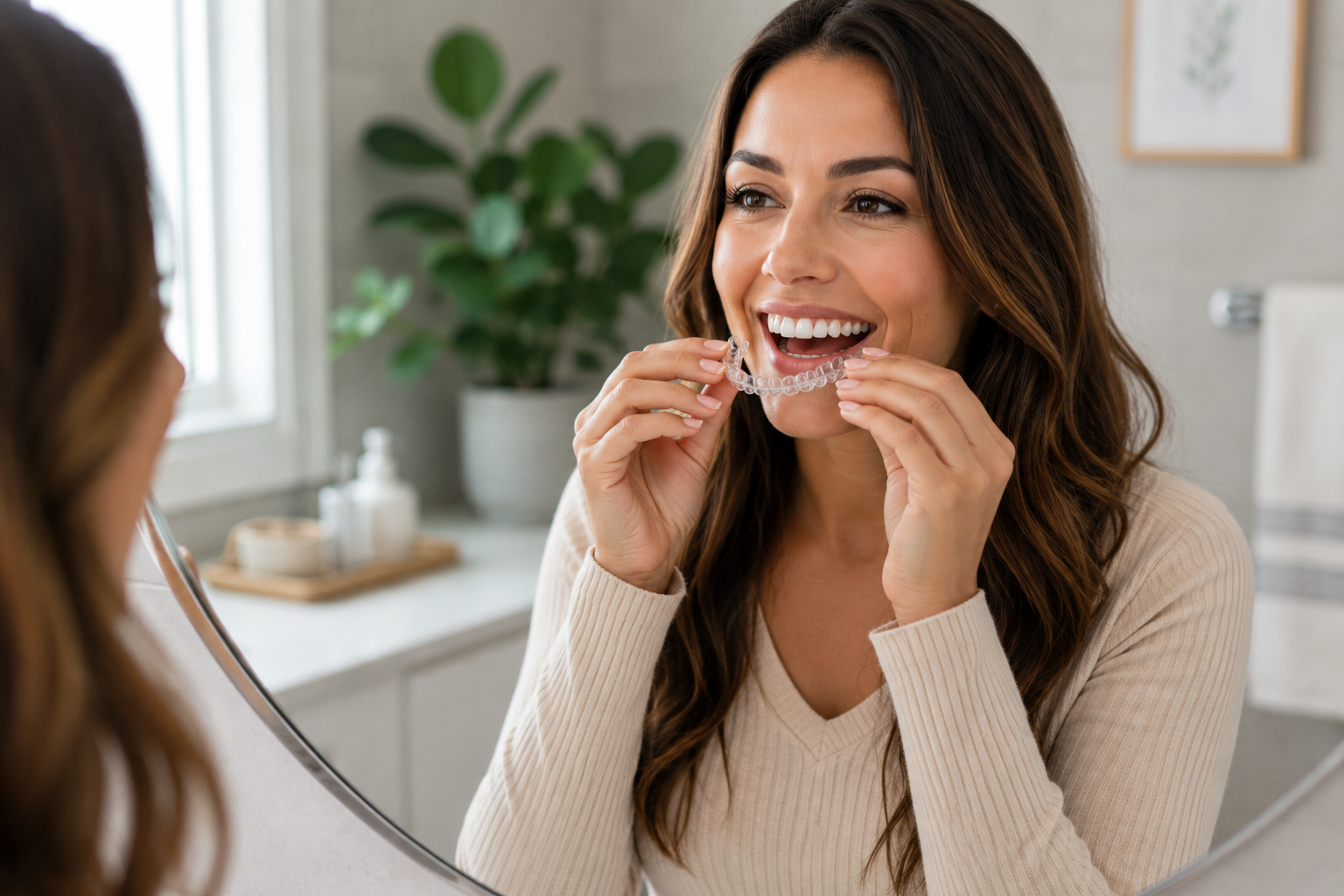
Invisalign uses a series of clear, custom-made aligners to gradually move teeth into better alignment. Each aligner is designed to apply gentle pressure to specific teeth.
As treatment progresses, patients switch to new aligners according to their dentist’s instructions. Over time, the aligners guide the teeth into a more ideal position.
Unlike braces, Invisalign does not use metal brackets or wires. The aligners are removable, which means patients can take them out while eating, drinking anything other than water, brushing, and flossing.
This makes Invisalign a popular option for adults and teens who want a more discreet orthodontic treatment.
Can Invisalign Fix Crowded Teeth?
Yes, Invisalign can often help fix mild to moderate crowded teeth.
Crowding happens when there is not enough room in the mouth for the teeth to sit properly. Teeth may overlap, twist, or push against each other. Crowding is common in the lower front teeth, but it can happen anywhere in the mouth.
Crowded teeth can affect both appearance and oral health. When teeth overlap, they can be harder to brush and floss. This may increase the risk of plaque buildup, cavities, gum inflammation, and bad breath.
Invisalign may help by gradually moving crowded teeth into better alignment. In some cases, your dentist may create small amounts of space between teeth or use attachments to guide movement.
Invisalign may be helpful for crowding if:
- Teeth are mildly or moderately overlapping
- Lower front teeth are crowded
- Teeth shifted after braces
- Crowding makes flossing difficult
- You want a straighter smile without metal braces
Severe crowding may require a different orthodontic approach. A consultation is the best way to know what is possible.
Can Invisalign Fix Gaps Between Teeth?
Yes, Invisalign can often help close gaps between teeth.
Gaps may occur naturally, or they may develop because of tooth size, missing teeth, gum issues, or shifting over time. Some patients have one noticeable gap between the front teeth, while others have spacing in several areas.
Invisalign can gradually move teeth closer together, helping create a more even smile.
Closing gaps may improve:
- Smile appearance
- Confidence
- Bite balance
- Food trapping between teeth
- Speech concerns in some cases
- Gum protection in certain areas
However, the cause of the gap matters. If spacing is related to missing teeth, gum disease, or tooth-size discrepancies, your dentist may recommend additional treatment before or after Invisalign.
For patients focused on overall smile appearance, Invisalign may also be part of a larger cosmetic dentistry plan.
Can Invisalign Fix an Overbite?
Invisalign may help improve certain overbite cases.
An overbite happens when the upper front teeth overlap the lower front teeth too much. A slight overbite is normal, but a deeper overbite may contribute to tooth wear, jaw discomfort, gum irritation, or cosmetic concerns.
Invisalign may be used to improve mild to moderate overbite issues by moving the teeth into better alignment. In some cases, attachments or other Invisalign features may help guide movement.
Signs of a problematic overbite may include:
- Upper teeth covering too much of the lower teeth
- Lower teeth touching the roof of the mouth
- Excessive front tooth wear
- Jaw discomfort
- Trouble biting into foods
- Cosmetic concerns with smile balance
More complex overbite cases may require braces, jaw treatment, or referral to an orthodontic specialist.
Can Invisalign Fix an Underbite?
Invisalign may help with some mild underbite cases.
An underbite happens when the lower front teeth sit in front of the upper front teeth when the mouth is closed. This can affect chewing, speaking, tooth wear, and facial balance.
Mild underbites caused mainly by tooth position may be treatable with Invisalign. More severe underbites, especially those related to jaw position, may require more advanced orthodontic or surgical treatment.
Your dentist will evaluate whether the underbite is caused by tooth alignment, jaw structure, or both.
Can Invisalign Fix a Crossbite?
Invisalign may help correct certain crossbite cases.
A crossbite happens when some upper teeth sit inside the lower teeth instead of outside them. This can occur in the front teeth or back teeth.
If left untreated, a crossbite may contribute to:
- Uneven tooth wear
- Gum recession
- Jaw discomfort
- Bite imbalance
- Chipped teeth
- Facial asymmetry in some cases
Invisalign may help move the teeth into better position if the crossbite is mild or moderate. More complex crossbite cases may require additional orthodontic treatment.
Can Invisalign Fix an Open Bite?
Invisalign may help with some open bite cases.
An open bite happens when the upper and lower teeth do not touch properly when the mouth is closed. This can make it harder to bite into certain foods and may affect speech.
Open bites can be caused by habits, tooth position, jaw growth, tongue posture, or other factors. Invisalign may help in certain cases, especially when the issue is related to tooth alignment.
Your dentist will need to determine the cause before recommending treatment.
Can Invisalign Fix Rotated Teeth?
Yes, Invisalign can often help correct rotated teeth, depending on the severity.
A rotated tooth is turned out of its proper position. This can affect appearance, spacing, bite, and cleaning ability.
Invisalign aligners may use attachments to help grip and guide rotated teeth into a better position. Attachments are small tooth-colored shapes placed on specific teeth during treatment. They help the aligners apply pressure more effectively.
Some rotations are easier to correct than others. Severe rotations may be more difficult and may require a different approach.
Can Invisalign Fix Teeth That Shifted After Braces?
Yes. Invisalign is often a strong option for adults whose teeth shifted after braces.
Teeth can move over time, especially if retainers were not worn consistently. Patients may notice crowding, gaps, or bite changes years after orthodontic treatment.
Invisalign can often correct mild to moderate orthodontic relapse without the need for metal braces.
Park Ave Dental Aesthetics has a full article on why teeth shift after braces and how Invisalign can help for patients who are dealing with this common issue.
Can Invisalign Help With Bite Problems?
Invisalign can help with some bite problems, especially when the issue is mild or moderate and related to tooth position.
Bite problems may include:
- Overbite
- Underbite
- Crossbite
- Open bite
- Crowding-related bite imbalance
- Teeth that do not meet evenly
A healthy bite matters because it helps distribute chewing pressure properly. When the bite is uneven, some teeth may experience too much force. This can lead to wear, sensitivity, chips, jaw discomfort, and other issues.
Not all bite problems can be corrected with Invisalign alone. Your dentist will evaluate your bite before recommending treatment.
What Invisalign May Not Be Able to Fix
Invisalign is effective for many patients, but it has limits.
Invisalign may not be the best option for:
- Severe crowding
- Severe bite problems
- Major jaw alignment issues
- Teeth that need complex vertical movement
- Severe rotations
- Cases requiring extractions for orthodontic reasons
- Patients who cannot wear aligners consistently
- Active gum disease or unstable oral health
In these situations, traditional braces or another treatment plan may be recommended.
The key is to get an evaluation before assuming Invisalign will or will not work.
Why Oral Health Matters Before Invisalign
Before beginning Invisalign, your teeth and gums need to be healthy enough for orthodontic movement.
If you have cavities, gum disease, infection, or other untreated concerns, your dentist may recommend addressing those issues first.
Healthy gums and bone are especially important because teeth move through bone during orthodontic treatment. If the foundation is not healthy, treatment may be less predictable or may create additional risks.
Park Ave Dental Aesthetics provides general dentistry to help patients maintain healthy teeth and gums before, during, and after Invisalign treatment.
How Your Dentist Determines If Invisalign Can Fix Your Smile
An Invisalign consultation helps determine whether clear aligners are appropriate for your teeth and bite.
During the visit, your dentist may evaluate:
- Tooth crowding
- Spacing
- Bite alignment
- Gum health
- Jaw function
- Tooth wear
- Previous orthodontic treatment
- Smile goals
- Oral hygiene habits
Digital scanning may also be used to create a detailed view of your teeth. Park Ave Dental Aesthetics uses technology such as the iTero 3D Scanner to support treatment planning and patient comfort.
After the evaluation, your dentist can explain what Invisalign may be able to fix, how long treatment could take, and whether another option would be better.
How Long Does Invisalign Take?
Invisalign treatment time depends on the complexity of your case.
Minor spacing or crowding may take less time. More involved bite or alignment concerns may take longer.
Treatment time can be affected by:
- How much movement is needed
- Whether bite correction is involved
- How consistently aligners are worn
- Whether attachments are needed
- Whether refinements are needed
- Your age and oral health
- Your treatment goals
Many patients want a fast result, but the goal should be safe, controlled tooth movement.
How Often Do You Wear Invisalign Aligners?
Invisalign aligners must be worn consistently to work properly.
Patients are typically instructed to wear their aligners most of the day and night, removing them only for eating, drinking anything other than water, brushing, and flossing.
If aligners are not worn as directed, teeth may not move properly. This can delay treatment or affect the final result.
Good Invisalign habits include:
- Wearing aligners as instructed
- Keeping aligners clean
- Storing aligners in their case
- Brushing before reinserting aligners
- Avoiding hot water on aligners
- Attending progress visits
- Switching aligners on schedule
Compliance is one of the biggest factors in Invisalign success.
Invisalign and Cosmetic Dentistry
Invisalign can improve more than tooth alignment. It can also help create a better foundation for cosmetic dental treatment.
For example, if a patient wants veneers but has crowded or uneven teeth, Invisalign may be recommended first. Straightening the teeth may improve smile symmetry and reduce the amount of tooth reshaping needed.
Invisalign may also be combined with whitening, bonding, crowns, or other cosmetic treatments depending on the patient’s goals.
Park Ave Dental Aesthetics offers cosmetic dentistry in Weehawken for patients who want a more confident smile.
Invisalign vs. Braces: Which Fixes More?
Both Invisalign and braces can straighten teeth, but braces may be better for more complex cases.
Invisalign is often a good choice for mild to moderate alignment issues and patients who want a discreet, removable option. Braces may be recommended for severe crowding, major bite correction, or complex tooth movement.
Park Ave Dental Aesthetics has a helpful article on braces vs. Invisalign for patients comparing both options.
The best treatment depends on your case, not just your preference.
Invisalign for Adults and Teens
Invisalign can be an option for both adults and teens, depending on their dental needs and ability to follow instructions.
Adults often choose Invisalign because they want a discreet treatment option that fits into work and social life. Teens may also benefit from clear aligners if they are responsible enough to wear them consistently.
Park Ave Dental Aesthetics has also covered Invisalign for adults for patients wondering whether it is too late to straighten their smile.
What Happens After Invisalign?
After Invisalign treatment, retainers are needed to help maintain your results.
Teeth naturally want to shift over time. Retainers help keep them in their corrected position.
Your dentist will explain:
- When to wear retainers
- How to clean them
- How long they should last
- When they may need replacement
- What to do if they feel tight
Skipping retainers can allow teeth to move back, which may undo your Invisalign results.
Invisalign in Weehawken, NJ
If you are wondering whether Invisalign can fix your crowded teeth, gaps, or bite concerns, the best next step is a consultation.
Park Ave Dental Aesthetics provides Invisalign treatment for patients in Weehawken and nearby communities, including Union City, West New York, Guttenberg, Hoboken, and Jersey City.
To learn more, visit the Invisalign page or contact Park Ave Dental Aesthetics to schedule an appointment.
Final Thoughts
Invisalign can fix many common orthodontic concerns, including mild to moderate crowding, gaps, rotated teeth, and certain bite issues. It can also help adults whose teeth shifted after braces.
However, Invisalign is not right for every case. Severe alignment or jaw issues may require another form of orthodontic treatment.
A personalized consultation is the best way to find out whether Invisalign can help you achieve the smile you want.
FAQ: What Can Invisalign Fix?
Can Invisalign fix crowded teeth?
Yes. Invisalign can often fix mild to moderate crowded teeth by gradually moving them into better alignment.
Can Invisalign fix gaps between teeth?
Yes. Invisalign can often close small to moderate gaps between teeth, depending on the cause of the spacing.
Can Invisalign fix an overbite?
Invisalign may help improve mild to moderate overbite cases. Severe overbites may require another treatment approach.
Can Invisalign fix an underbite?
Invisalign may help with some mild underbite cases, especially when the issue is related to tooth position rather than jaw structure.
Can Invisalign fix a crossbite?
Yes, Invisalign may help correct certain mild to moderate crossbite cases. A consultation is needed to determine whether it is appropriate.
Can Invisalign fix rotated teeth?
Invisalign can often help rotate teeth into better position, although severe rotations may be more difficult to correct.
Can Invisalign fix teeth that shifted after braces?
Yes. Invisalign is commonly used for adults whose teeth shifted after braces, especially when relapse is mild to moderate.
What can Invisalign not fix?
Invisalign may not be ideal for severe crowding, complex bite problems, major jaw alignment issues, or cases requiring advanced orthodontic movement.
How do I know if Invisalign will work for me?
The only way to know is through an Invisalign consultation. Your dentist will evaluate your teeth, bite, gums, and smile goals.
Where can I get Invisalign in Weehawken, NJ?
Park Ave Dental Aesthetics offers Invisalign consultations in Weehawken, NJ for patients who want to correct crowding, gaps, shifted teeth, or bite concerns.